Videos
-
 Gutierrez: Trying to manage Venezuela from Washington is unrealistic
 -
Carlos Gutierrez: Rise to Success
-
Fmr. Commerce Secretary Carlos Gutierrez: Some countries will be hit with tariffs
-
Former Commerce Sec. Carlos Gutierrez: I expect a deal between Mexico-U.S. on fentanyl cooperation
-
Gutierrez: Uncertainty makes long-term business planning nearly impossible
-
Carlos Gutierrez: There Are People All Over U.S. Who Want Better Relations With Cuba
-
Fmr. Commerce Secretary Carlos Gutierrez on U.S.-China relationship: Right now it's at rock bottom
-
Former Commerce Secretary Carlos Gutierrez on Taiwan's election result


Learn More About Carlos Gutierrez
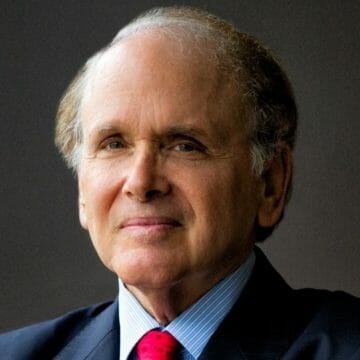
With geopolitical instability, trade disruption, workforce shortages, and a rapidly changing global economy reshaping the business landscape, leaders need a clearer way to make decisions in an environment where politics, markets, and talent are increasingly intertwined. Secretary Carlos Gutierrez helps organizations do exactly that. Drawing on experience at the highest levels of both business and government, he shows leaders how to navigate uncertainty, anticipate global shifts, and build organizations that can compete in a more volatile world.
Carlos Gutierrez is the former U.S. Secretary of Commerce, former Chairman and CEO of Kellogg Company, and current Co-Founder and Executive Chairman of EmPath. One of the few executives to have led a Fortune 500 company and later served in a presidential Cabinet, Gutierrez brings a rare perspective on the forces now shaping business: global trade, immigration, economic policy, supply chains, geopolitical risk, and the future of work. He is also Chair Emeritus of Albright Stonebridge Group, where he advised multinational organizations on strategy and global growth.
Gutierrez’s perspective is rooted in one central idea: leaders can no longer separate business strategy from the broader forces reshaping the world around them. Trade policy affects supply chains. Immigration policy affects talent strategy. Political instability affects investment decisions. The organizations that succeed will be the ones that understand how these forces connect – and act before competitors do.
How to Lead Through Geopolitical and Economic Uncertainty
For many organizations, the greatest challenge is not simply disruption – it is the speed and complexity of the disruption. Trade tensions, changing alliances, inflation, tariffs, nearshoring, and regional instability are forcing leaders to rethink long-held assumptions about where to invest, where to hire, and how to grow.
Gutierrez helps executives understand what these changes mean in practical terms. As U.S. Secretary of Commerce, he played a central role in shaping American trade and competitiveness policy during a period of major global transition. He was deeply involved in free trade negotiations, export strategy, and U.S. relationships with Latin America and Asia. Today, he brings that experience to the business challenges organizations face right now: how to reduce risk, strengthen supply chains, and compete in a world where economic policy increasingly drives business outcomes.
He is especially compelling on the future of North American competitiveness. Gutierrez argues that the combination of the United States, Mexico, and Canada represents one of the world’s most powerful economic platforms – if organizations know how to take advantage of it. He offers leaders a practical framework for evaluating reshoring and nearshoring strategies, understanding the long-term implications of U.S.–China competition, and identifying where new opportunities for growth are emerging.
Executives leave with a clearer understanding of how geopolitical shifts will affect their organization – and how to make better strategic decisions before those shifts become crises.
Turning Workforce Challenges Into Competitive Advantage
At a time when many organizations are struggling to attract talent, retain employees, and prepare their workforce for the future, Secretary Gutierrez offers an unusually pragmatic perspective. He has long argued that immigration, labor shortages, and workforce development are not simply political issues – they are business issues.
As a Cuban immigrant who arrived in the United States after his family fled Cuba, Secretary Gutierrez understands firsthand how resilience, adaptability, and opportunity shape both individuals and organizations. That experience informs his broader view that companies must rethink how they identify talent, build leadership pipelines, and create cultures capable of adapting to rapid change.
Through his current work at EmPath, Secretary Gutierrez focuses on the future of skills and the growing gap between the capabilities organizations need and the capabilities many workers currently possess. He challenges leaders to move beyond outdated assumptions about credentials and traditional career paths and instead focus on the skills, agility, and potential that drive performance.
For leaders facing labor shortages, demographic change, and the impact of AI on the workforce, Secretary Gutierrez provides a practical roadmap for building stronger, more resilient organizations. He helps executives understand how to create talent strategies that align with long-term business needs, how to develop more inclusive leadership pipelines, and how to prepare employees for an economy being reshaped by automation and technological change.
The result is not simply a better understanding of workforce trends. Leaders leave with a clearer strategy for attracting and developing the talent their organizations will need in the years ahead.
Why Most Organizations Get Transformation Wrong
Long before he entered government, Secretary Gutierrez built his reputation as the executive who transformed Kellogg Company during a period of stagnant growth and changing consumer demand. Rising through the company over nearly three decades, he became the youngest CEO in Kellogg’s history and the only Latino CEO of a Fortune 500 company at the time.
As CEO, he led a sweeping reinvention of the business. Rather than chasing growth through volume alone, Secretary Gutierrez introduced what became known as Kellogg’s “volume-to-value” strategy: focusing on stronger brands, higher-value products, innovation, and disciplined investment. The strategy reshaped the company’s portfolio and positioned Kellogg for sustained growth at a moment when many competitors were still relying on outdated assumptions.
The lesson, Secretary Gutierrez argues, is that most organizations fail at transformation because they focus on reacting to short-term pressure rather than making deliberate, strategic choices. In his keynote presentations, he shows leaders how to identify the assumptions holding their organizations back, how to communicate change in a way employees will support, and how to make difficult decisions without losing momentum.
He frequently draws on examples from consumer products, manufacturing, financial services, and global business, demonstrating how the same principles apply across industries. Whether the challenge is digital transformation, organizational change, innovation, or navigating economic uncertainty, Secretary Gutierrez gives leaders a practical framework for leading through disruption with greater confidence and clarity.
What makes Secretary Carlos Gutierrez especially valuable right now is his ability to connect the biggest issues facing organizations – trade, geopolitics, talent, leadership, and transformation – into one coherent picture. He does not offer abstract theory or broad predictions. He gives executives a way to think more strategically about the forces shaping their business and the decisions they need to make next.
His presentations are particularly valuable for Fortune 100 and global organizations whose leaders are confronting complex change across markets, workforces, and regions. Audiences leave with a sharper understanding of the risks ahead, a clearer sense of where opportunity lies, and a practical framework for leading in a more uncertain world.
###
Secretary Carlos Gutierrez is a business leader and former Cabinet official whose career has spanned the worlds of global business, public policy, and workforce strategy. He is currently Co-Founder and Executive Chairman of EmPath, a workforce technology company, and Chair Emeritus of Albright Stonebridge Group, where he advised multinational organizations on strategy, growth, and geopolitical risk.
A Cuban immigrant whose family fled Havana in 1960, Secretary Gutierrez began his career at Kellogg Company in Mexico in 1975 as a sales representative. Over the next three decades, he rose through leadership positions across Mexico, Canada, the United States, and Asia before becoming President and CEO of Kellogg in 1999 and later Chairman of the company. At the time, he was the youngest CEO in Kellogg’s history and the only Latino CEO of a Fortune 500 company.
As CEO, Secretary Gutierrez led a major transformation of Kellogg during a period of stagnant growth and changing consumer demand. He introduced the company’s “volume-to-value” strategy, shifting Kellogg away from growth through volume alone and toward stronger brands, innovation, higher-value products, and disciplined investment. The strategy reshaped the company’s portfolio and positioned it for long-term growth.
In 2005, President George W. Bush appointed Secretary Gutierrez as the 35th U.S. Secretary of Commerce. During his tenure, he played a central role in advancing U.S. competitiveness, trade, and economic policy, with a particular focus on exports, Latin America, Asia, and global supply chains.
Today, Secretary Gutierrez is especially sought after for his ability to help leaders understand the intersection of business and policy. He speaks on trade and tariffs, U.S.-China competition, workforce strategy, immigration, Latin America, organizational transformation, and the future of North American competitiveness. Drawing on his experience in both the boardroom and the Cabinet Room, he helps executives understand not only what is changing, but how to respond strategically.
Secretary Carlos Gutierrez is available to advise your organization via virtual and in-person consulting meetings, interactive workshops and customized keynotes through the exclusive representation of Stern Speakers & Advisors, a division of Stern Strategy Group®.

The Immigrant Nation
Winter 2026