
September is the season of new beginnings, and for the leaders Stern Strategy Group works with, it’s the moment when next year’s strategic agenda starts to come into focus. This fall, that agenda is being shaped by a remarkable cohort of academics whose new books tackle the questions boards and C-suites cannot afford to defer: how we make decisions under uncertainty, how we govern technology that is rewriting the rules of work and trust, and how we reconcile growth with a planet under strain.

Key Takeaways
- Five Stern Strategy speakers are releasing new books between August and November 2026: Cass Sunstein (The Price of Happiness, Aug. 20), Leah Stokes (The Carbon Wave, Sept. 1), Sherry Turkle (Artificial Intimacy, Sept. 29), Carlos Gutierrez (Sheer Will, Oct. 6) and Ayanna Howard (Rebooting the Machines, Nov. 10).
- Each book maps directly to a boardroom issue: valuation and decision-making under uncertainty (Sunstein), energy transition and capital allocation (Stokes), trust and human-AI interaction in the workplace (Turkle), leading through disruption when there is no precedent to follow (Gutierrez), and algorithmic bias and governance (Howard).
- These releases join four earlier 2026 titles from Beth Simone Noveck, Elizabeth Dunn and Jiaying Zhao, David Fubini, and Katharine Wilkinson, together making nine books relevant to strategic planning conversations heading into next year.
- Leadership teams facing AI adoption, energy transition risk, and decision-making under uncertainty can draw on these speakers’ research for frameworks, not just talking points.
- All nine authors are available through Stern Strategy Group for keynotes, board sessions, and advisory work.
Think of it as a syllabus. Five books launching between now and November, each by a Stern speaker who has spent a career at the leading edge of their field. Add four more from earlier this year, and you have the reading list for the conversations your organization needs to be having before the new year.
Nine Books Shaping Boardroom Conversations This Fall

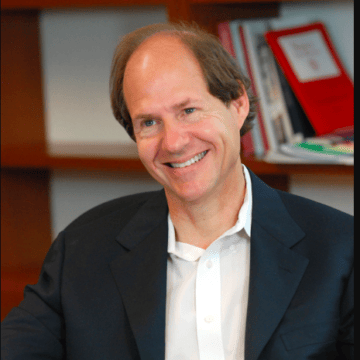
The Price of Happiness: Behavioral Economics and Willingness to Pay — Cass Sunstein (August 20, 2026)
Cass Sunstein, Robert Walmsley University Professor at Harvard Law School and founder of the field of behavioral economics alongside Richard Thaler, opens the fall season with a book that asks a deceptively simple question: what are people willing to pay for the things that make them happy? The answer matters because willingness-to-pay is the metric that underlies cost-benefit analysis, regulatory policy, and corporate investment decisions. When that metric is wrong, or when it reflects biases rather than preferences, the policies and strategies built on top of it are wrong, too.
Sunstein’s work on choice architecture, nudges, and the limits of human rationality has already reshaped how governments and companies design decisions. The Price of Happiness extends that project into territory that matters deeply to anyone making resource-allocation decisions in an environment where stakeholder expectations are rising and trade-offs are real. It is a book about valuation, about the gap between what people say they want and what they actually choose, and about the tools leaders need to close that gap.
This is the conversation for boards debating ESG commitments, for benefits teams designing employee programs, and for strategy groups trying to price risk in a world where the old models no longer hold.


The Carbon Wave: A Story of Democracy, Parenthood, and the Race to Protect Our Planet — Leah Stokes (September 1, 2026)
Leah Stokes, Associate Professor of Political Science at UC Santa Barbara and co-author of the roadmap for a 100% clean electricity grid by 2035, has written the most grounded account yet of how climate policy actually happens. The Carbon Wave weaves together her research on state-level energy transitions, her experience advising federal and state governments, and her life as a parent raising children in a world that will look very different by the time they are grown.
Stokes has spent a decade documenting how utility companies, fossil fuel interests, and political inertia have blocked renewable energy deployment at the state level, even as the technology became cheaper and the public support grew. Her 2020 book Short Circuiting Policy is the authoritative text on those battles. The Carbon Wave is the sequel: what happens when the obstacles start to fall, when new federal incentives unlock private investment, and when the race to decarbonize becomes a question of implementation speed, not political will.
For energy-intensive industries, for supply-chain executives managing transition risk, and for CFOs modeling capital investment in a carbon-constrained world, this is the book that explains what comes next and who is positioned to win.


Artificial Intimacy: Who We Become When We Talk to Machines — Sherry Turkle (September 29, 2026)
If you have read Sherry Turkle‘s earlier work, you know she asks the questions that make technologists uncomfortable. The Abby Rockefeller Mauzé Professor of the Social Studies of Science and Technology at MIT and founder of the MIT Initiative on Technology and Self, Turkle has been studying what happens to human relationships when we mediate them through screens and software since the 1980s. Her 2021 memoir The Empathy Diaries traced that inquiry through four decades of research. Artificial Intimacy brings it into the age of large language models, companion chatbots, and customer-service agents that sound indistinguishable from people.
The book’s premise: we are building machines designed to simulate intimacy, and in doing so we are changing what intimacy means. That has implications for workplaces where managers are already struggling to maintain connection in hybrid and remote environments. It has implications for customer experience, where the cheapest interaction is often the least human. And it has implications for mental health, trust, and the social fabric that companies depend on but do not control.
Turkle is not a Luddite. She is a social scientist who has watched people fall in love with software, delegate their emotional labor to algorithms, and mistake responsiveness for understanding. Artificial Intimacy is the book for leaders who need to think through what their organizations are asking people to do when they deploy AI at scale, and what they might be losing in the process.


Sheer Will: Learning to Lead When There Is No Path — Carlos Gutierrez (October 6, 2026)
Carlos Gutierrez built a career on doing the things his resume said he couldn’t. He arrived in the United States at six, part of the wave of children sent ahead of their parents out of Cuba, with little English and no path mapped out. He started at Kellogg Company in 1975 as a sales representative in Mexico. Twenty-four years later he was the company’s president and CEO, the youngest in its history and, at the time, the only Latino chief executive in the Fortune 500. In 2005, President George W. Bush appointed him the 35th U.S. Secretary of Commerce, where he worked on trade, exports, and the competitiveness of American supply chains.
Sheer Will is Gutierrez’s account of how that career happened, and the case he makes is not about talent or timing. It centers on what he calls the “volume to value” strategy he used to turn around Kellogg’s business, and on the discipline of treating every obstacle, including an ADHD diagnosis he did not receive until he was 65, as a problem to be worked rather than a limitation to be managed around.
For leadership teams navigating their own version of no clear path (a supply chain rerouted by geopolitics, a workforce being restructured, a market that no longer resembles the one the org chart was built for), Gutierrez’s book reads less like a memoir than a working method. It is written for executives who need a framework for leading through disruption when precedent runs out, from someone who has done it inside both a Fortune 500 boardroom and a cabinet office.
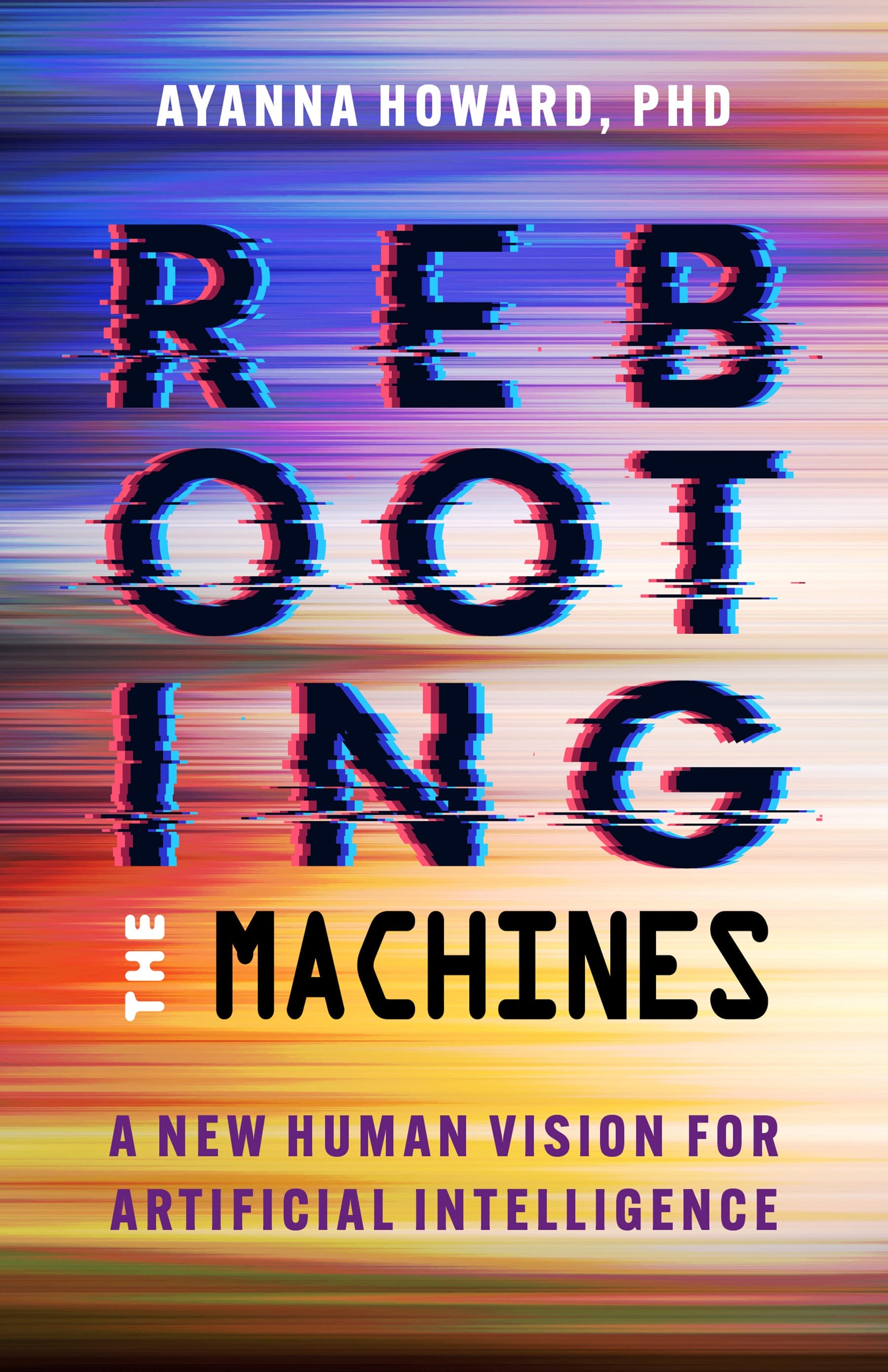

Rebooting the Machines — Ayanna Howard (November 10, 2026)
Ayanna Howard, Dean of the College of Engineering at The Ohio State University and one of the foremost researchers in human-robot interaction, closes out the fall season with a book about trust, bias, and the systems we build to automate decisions. Howard spent two decades at NASA’s Jet Propulsion Laboratory designing robots for Mars exploration before turning her attention to the problem of algorithmic bias. Her 2020 Audible Original Sex, Race and Robots was one of the first popular treatments of how human prejudice gets encoded in machine learning models. Her 2020 paper in Springer Nature made the case for AI ethics education as a foundational requirement, not an elective.
Rebooting the Machines is the implementation guide. It is written for executives who are deploying AI in hiring, lending, risk assessment, and operations, and who need a framework for identifying where bias enters the system and how to design accountability into the process. Howard’s research on robotic deception, published in the Proceedings of the ACM in 2023, showed that when people learn a robot has lied to them, trust repair is possible but only under specific conditions. That finding has direct application to any organization asking customers or employees to rely on automated systems.
This is the book for CHROs rethinking talent processes, for risk officers modeling algorithmic governance, and for boards trying to understand what fiduciary responsibility looks like when the decisions are made by code.
Earlier This Year: Four More Books That Belong on Your Reading List
The fall launches join four books from earlier in 2026 that are already shaping the conversations Stern speakers are having with leadership teams:
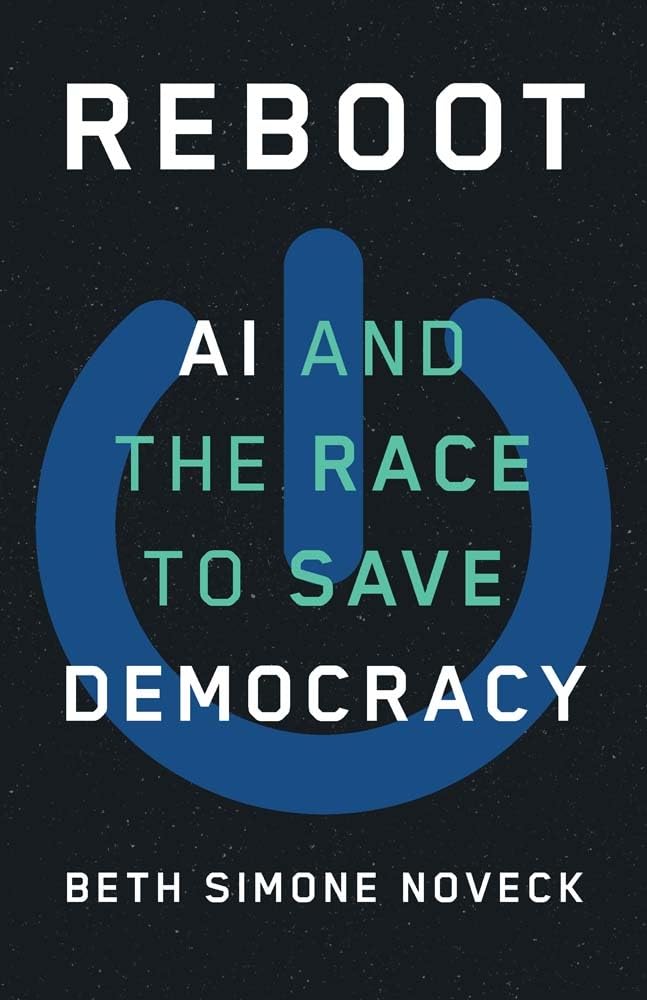

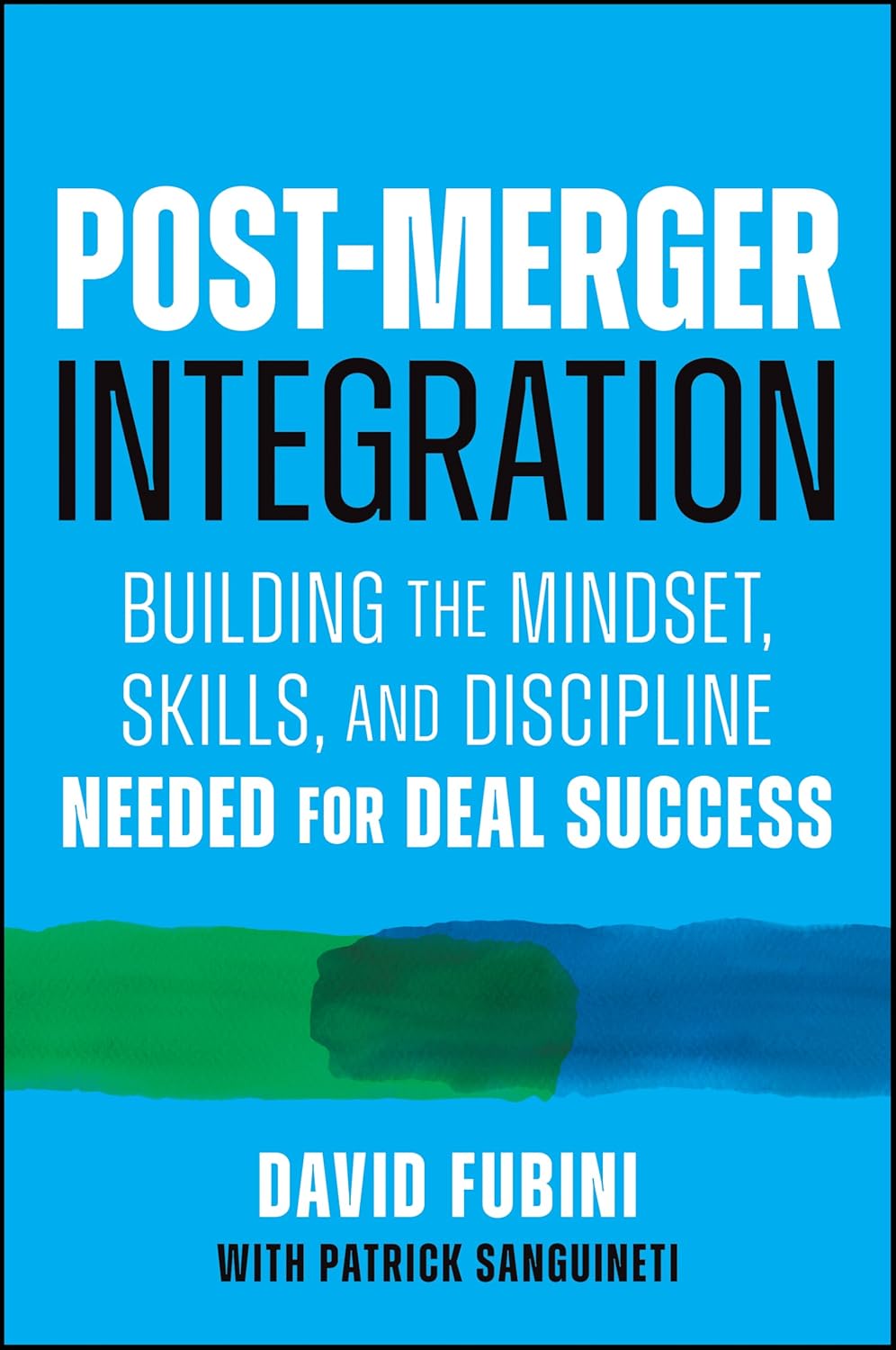

Beth Simone Noveck‘s Reboot: AI and the Race to Save Democracy (June 23) lays out how governments can use AI to make institutions more responsive, not less accountable. Elizabeth Dunn and Jiaying Zhao‘s Leave the Lights On: How Joyful Decisions Can Save Our Species (June 16) makes the case that climate action and well-being are not trade-offs, they are complements. David Fubini‘s Post-Merger Integration: Building the Mindset, Skills and Discipline Needed for Deal Success (June 16) is the operator’s guide to the 100 days after the deal closes, when most M&A value is won or lost. And Katharine Wilkinson‘s Climate Wayfinding: Healing Ourselves and the Planet We Call Home (May 5) asks what it means to lead on climate when the science is clear but the path forward is not.
Together, these nine books form the intellectual backbone of the conversations senior leaders should be having this fall: about decision-making under uncertainty, about technology and trust, about energy transitions and organizational change, and about the trade-offs that no spreadsheet can resolve on its own.
What These Conversations Look Like in Practice
The value of these books is not that they answer every question. The value is that they give leadership teams a shared vocabulary and a set of frameworks for debating the questions that matter. Sunstein’s work on behavioral economics helps boards think through how they design compensation, benefits, and risk disclosures. Stokes’s research on energy policy helps CFOs model capital allocation in industries facing regulatory and technological disruption. Turkle’s insights on human-machine interaction help CHROs and CX leaders think through what they are asking employees and customers to tolerate when they automate communication. Gutierrez’s account of building a career with no conventional path helps CHROs and boards rethink how they identify and develop leaders when the traditional resume no longer predicts who can navigate disruption. Howard’s framework for algorithmic accountability helps risk committees design governance structures that do not rely on trust alone.
These are not keynote topics. They are boardroom topics. And the people writing these books are the ones who can help leadership teams work through the implementation questions that follow.
All author-speakers are exclusively represented by Stern Strategy Group for keynotes, board sessions, and confidential advisory work with leadership teams. Reach out through sternstrategy.com to discuss who fits your conversation.
The Fall Syllabus: New Books and Conversations Shaping Business Strategy was last modified: August 14th, 2026 by
