Videos
-
 Authors Kevin Werbach and Dan Hunter Discuss New Edition of Gamification Book, "For the Win"
 -
The Future of AI Regulation: Protecting Children in the Age of AI
-
What is a Blockchain in Cryptocurrency?
-
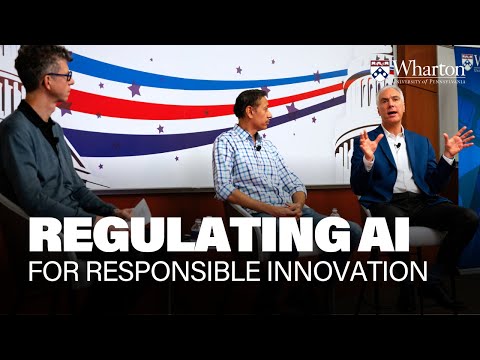
AI Regulation: Wharton Professors on How to Promote Responsible Innovation
-
The Rise of Govcoins & What’s Next for Crypto
-
Bitcoin
-
Cryptocurrency
-
Digital Asset
-
Wharton Great Question: Prof. Kevin Werbach – Cryptocurrency & Fintech
-
The Blockchain and The New Architecture of Trust | Kevin Werbach | Talks at Google
-
'For the Win': How Gamification Can Transform Your Business
-
Kevin Werbach: Trustless Trust?
-
Penn Wharton Budget Model’s First Spring Policy Forum: Afternoon Sessions
-
Professor Kevin Werbach on Gamification: Wharton Lifelong Learning Tour













Learn More About Kevin Werbach
Technologies such as artificial intelligence and blockchain promise an algorithmic world, where machine networks take on a growing share of formerly human activity. Organizations face two daunting questions. First, how real are these visions, and how will technology actually reshape our lives, our economy and our societies? Second, how can law, trust and accountability possibly keep up?
With decades of experience in tech, government and academia, Kevin Werbach is an authority on both the opportunities and threats of emerging technologies. His insights on regulation, business impacts and responsible governance are sought after by leaders and policymakers around the world.
Chair of the Department of Legal Studies and Business Ethics at The Wharton School, University of Pennsylvania, Werbach is a pioneer in the fields of AI governance, Internet policy, gamification – applying digital game design principles to business – and digital asset regulation. He combines a deep understanding of technology developments with a sophisticated appreciation of business and the public policy process. His approach is grounded and pragmatic: skeptical of both hype and doomsaying, focused on what organizations can actually do to make AI and other technologies work, both effectively and responsibly.
Werbach leads the Wharton Accountable AI Lab, created the first business school course on AI governance, hosts the podcast The Road to Accountable AI, and is academic director of Wharton’s Strategies for Accountable AI program.
In the blockchain field, he leads the Wharton Blockchain and Digital Asset Project, created the pioneering Reg@Tech Roundtable for global regulators and legal experts, was lead author of The Stablecoin Toolkit, and co-chairs the World Economic Forum’s Global Futures Council on Decentralized Finance.
Werbach is also an expert on China’s AI environment, leading Wharton’s Global Modular Course on technology and AI in China. Hundreds of thousands of learners worldwide have enrolled in his top-rated online course on Gamification. Whether the audience is C-suite executives, board members, or cross-functional teams, Werbach delivers actionable insights on how technology innovation, ethics and regulatory developments will shape the business landscape.
Werbach helped develop the U.S. approach to internet policy as Counsel for New Technology Policy at the Federal Communications Commission (FCC) during the Clinton Administration and later served as an expert advisor to the FCC and U.S. Department of Commerce during the Obama Administration. He also founded Supernova Group, a technology consulting and conference firm.
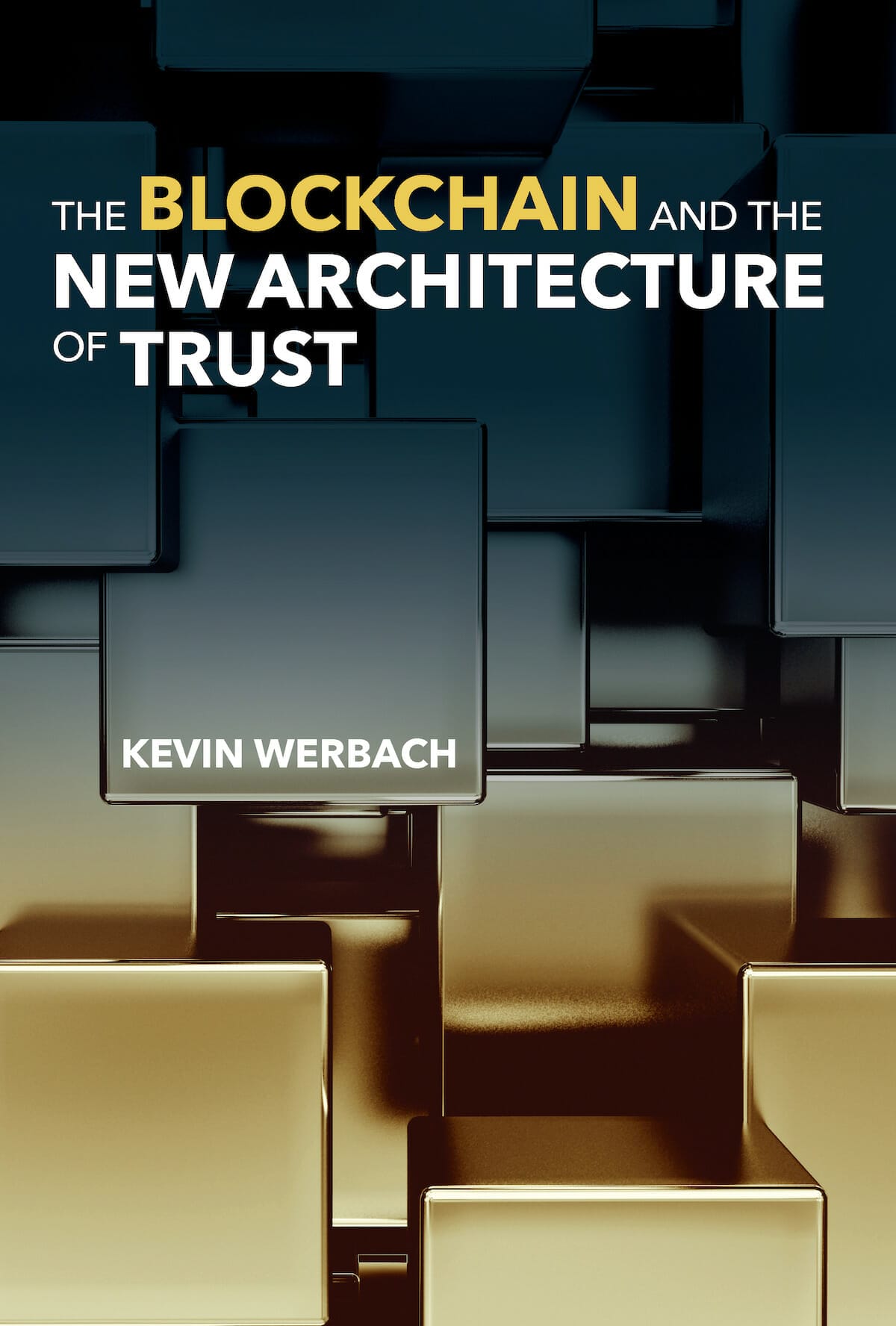
Werbach’s books include “The Blockchain and the New Architecture of Trust” (MIT Press, 2018), “For the Win: The Power of Gamification and Game Thinking in Business, Education, Government, and Social Impact” (Wharton School Press, revised and updated 2020, with Dan Hunter), “After the Digital Tornado: Networks, Algorithms, Humanity” (Cambridge University Press, July 2020), and “Foundations of Decentralized Organizations: Blockchain and the Future of Corporate Law” (Oxford University Press, 2026, co-edited with Eva Micheler and Bianca Kremer).
A recipient of the Aspen Institute’s Ideas Worth Teaching award and the Nesta Decentralized Future Prize, Werbach is a sought-after commentator who has appeared frequently in print and broadcast media, including CNN, PBS NewsHour, CNBC, NPR, ABC News, USA Today, The New York Times, The Los Angeles Times, The Wall Street Journal, The Washington Post, Financial Times, The Economist, Harvard Business Review, Wired and Fortune, and he has testified before both houses of the U.S. Congress.
Werbach is a magna cum laude graduate of Harvard Law School, where he served as publishing editor of the Harvard Law Review, and a summa cum laude graduate of the University of California at Berkeley.
Kevin Werbach is available to advise your organization via virtual and in-person consulting meetings, interactive workshops and customized keynotes through the exclusive representation of Stern Speakers & Advisors, a division of Stern Strategy Group®.
Accountable AI: How Governance Can Bridge AI's Trust Gap
AI is changing every industry, but more people are worried about it than excited. The risks are real: costly errors, discrimination, privacy violations and misuse are driving regulation, litigation and customer pushback. Governance can actually be a competitive advantage. Drawing on his renowned Wharton course “Big Data, Big Responsibilities,” Kevin Werbach maps the legal and ethical challenges of the AI-driven data economy and the mechanisms emerging to address them. He shows why organizations that get accountability right will avoid trouble and build AI systems that work better. This presentation provides an essential guide for leaders who want to move fast on AI without breaking trust.
The Rise of Blockchain: Myths, Realities and Opportunities
Blockchain and crypto are simultaneously overhyped and underhyped. Digital assets still carry the stigma of speculative bubbles and illicit activity yet dismissing them would be a serious mistake. While headlines chase bitcoin’s price swings and premature Web3 promises, blockchain platforms have quietly matured behind the scenes. Regulators are establishing solid legal foundations, stablecoins are entering global payment systems, and smart contracts are becoming critical enablers for agentic commerce. Kevin Werbach cuts through the noise with a balanced assessment of where digital assets and blockchain actually stand and where they’re headed. This talk is vital for leaders who need to understand what these technologies will actually mean for their business.
The Future of Blockchain is AI (and Vice Versa)
The crypto winter and the ChatGPT moment arrived almost simultaneously, but the real story is how these two transformative technologies are converging. AI faces critical challenges around data governance, alignment and concentration of power — and blockchain may hold the keys to solving them. From content provenance and decentralized compute to AI-powered DAOs and autonomous agents that control real assets, the intersection of blockchain and AI is reshaping how we think about trust, decentralization and the future of the firm itself. Kevin Werbach draws on deep expertise in both domains to map out the landscape: where blockchain enables AI governance and decentralization, where AI supercharges on-chain systems, and what scenarios – from enterprise AI audits to autonomous DeFi agents running wild – organizations need to prepare for. Werbach provides essential guidance for leaders navigating the next wave of technological disruption.
Governing AI Agents
Generative AI chatbots were the opening act. The real revolution is agentic AI: systems that set goals and take action in the world, fundamentally changing the nature of work along the way. The benefits are enormous, but so are the risks. When AI can delete data, execute mistaken transactions or cause physical harm, governance stops being a nice-to-have. Established and emerging frameworks can help manage these risks, though new structures will also be needed to identify agents and keep legal accountability from falling behind. In this timely session, Kevin Werbach explains what agentic AI changes, what it demands and how smart organizations can build governance into their AI strategy early, before the agents start making decisions for them.
Here Come the AI Regulators: What Should You Do?
AI’s rise has predictably triggered intense regulatory debate worldwide. Major countries and regions are each taking distinct approaches, from Europe’s AI Act to China’s targeted laws to a fragmented American landscape. Meanwhile, private litigation rolls on regardless. The regulatory picture is moving fast, often in contradictory directions, and the political tensions driving it – accelerationists vs. doomers, US vs. China, tech industry libertarians vs. anti-big-tech populists – make the path ahead hard to predict. In this revealing presentation, Kevin Werbach breaks down the most significant legal and regulatory developments globally and offers AI deployers a practical pathway to avoiding missteps and thriving no matter how these debates resolve.
AI and the Race to Trust
The winner in digital payments wasn’t the company with the splashiest marketing or the earliest buzz. It was the one obsessively focused on fraud detection. The same pattern is playing out in AI. The frontier labs investing most heavily in alignment can deploy autonomous tools that competitors can’t match. Labs that dismiss safety concerns keep stumbling into crises that enterprise customers notice. We’ve seen this movie before: Uber’s self-driving unit never recovered after cutting safety corners led to a fatal crash. In this important session, Kevin Werbach draws on historical and recent cases to show that trustworthiness is becoming a core business competency, which is all the more important in the nascent world of AI.







































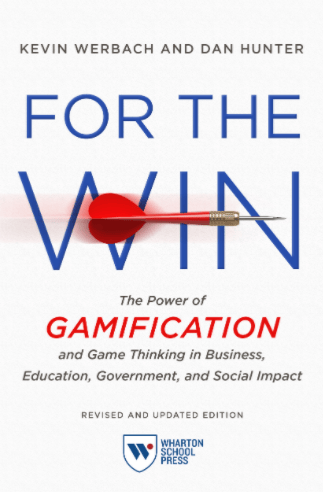
For the Win: The Power of Gamification and Game Thinking in Business, Education, Government, and Social Impact
(Wharton School Press, November 2020)
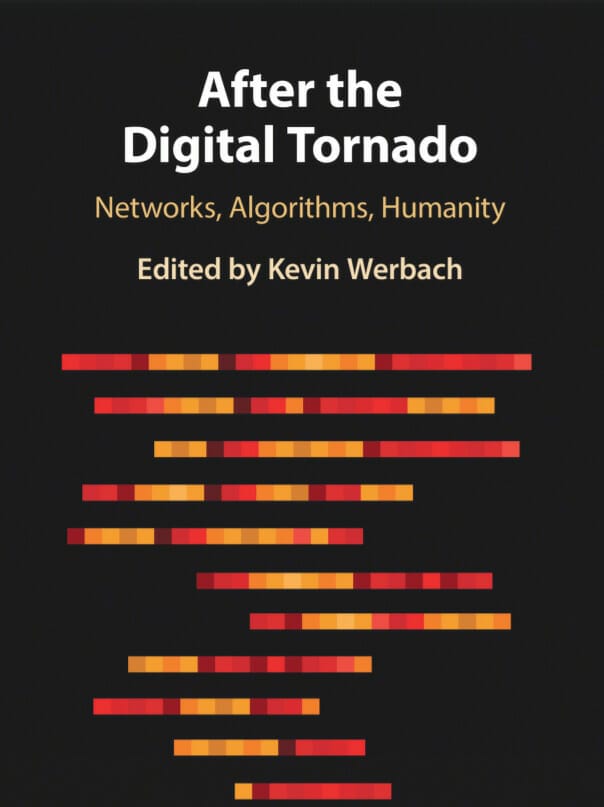
Praise for “After the Digital Tornado”
“An important collection of diverse perspectives on the legal, ethical and social challenges of the information age. Essential reading for anyone interested in the past and future of Internet policy.”
“Kevin Werbach assembles some of the world’s best thinkers to analyze the transformations wrought by code, data, and silicon. A masterful meditation on what is next for digital life and how policy might be able to harness technology for good.”
“This book is destined to be as vital to the debate over the future of the Internet as Werbach’s ground-breaking white paper Digital Tornado. It examines how much the Internet has changed over two decades and looks ahead with concrete recommendations about how to ensure a vibrant and open Internet ecosystem from some of the world’s top experts in Internet law and policy.”
“Some of the sharpest thinkers about technology and society examine where we have come from, what has changed, and what the future may be. Old models, antitrust, new power centers, dehumanized humanity, blockchain, and more are explored and explained with an eye to what we can and should do next.”