
Videos
-
 How to Die Young at a Very Old Age | Dr. Nir Barzilai, 2024 Longevity Summit | Aviv Clinics
 -
Why Centenarians Are Defying Science: Secrets to Living 100+
-
Slow Aging with a Pill? | Nir Barzilai, MD | The Proof Podcast Bonus EP
-
Emerging aging research | Nir Barzilai | TEDxBoston
-
Nir Barzilai - "Age later" advise from those who do
-
Ageing is a treatable disease | Nir Bazilai | TEDxBeaconStreetSalon
-
Age before beauty Q&A - "Examining the False Dichotomy of Lifespan Versus Healthspan"
-
Can we grow older without growing sicker?
-
How to die young at a very old age | Nir Barzilai | TEDxGramercy
-
Longevity Genes (1 of 5): Nir Barzilai, M.D.


Learn More About Nir Barzilai
With longer lifespans, rising chronic disease costs and an aging workforce reshaping the future of business, leaders are confronting a profound strategic question: how can organizations help people live and work healthier for longer? The implications extend far beyond health care. Longevity is changing talent strategy, benefits design, retirement planning, innovation pipelines, consumer markets and the economics of productivity. Dr. Nir Barzilai helps leaders understand this transformation not as a distant demographic issue, but as one of the defining business, medical and societal shifts of our time.
A leading figure in geroscience, Barzilai is Director of the Institute for Geroscience at Albert Einstein College of Medicine, where he also serves as Professor of Medicine and Genetics and directs BIO VITAL, the Center for Validation of Interventions Targeting Aging and Longevity. He is President and co-founder of the Academy of Geroscience, a Fellow of the Association of American Physicians and the New York Academy of Medicine, and a member of the Board of Directors of the American Federation for Aging Research. Named to TIME’s Longevity Leaders 2026, he is recognized as one of the twelve figures most shaping the science and future of healthy human longevity. The author of “Age Later: Health Span, Life Span, and the New Science of Longevity”, Barzilai has published more than 380 scientific papers and made seminal contributions to understanding why some people remain healthy well into their 90s and beyond.
His central insight is both scientifically rigorous and strategically urgent: aging itself has biological drivers, and those drivers can be studied, measured and potentially targeted to prevent or delay the diseases that most often limit human potential. For executives, this shifts longevity from a wellness trend to a serious framework for thinking about risk, innovation, workforce resilience and the future of health.
Turning Longevity From a Personal Aspiration into an Organizational Strategy
Most organizations still think about aging through the lens of cost: higher health claims, later retirements, caregiving demands and chronic disease management. Barzilai offers a different way to understand the issue. His research suggests that the diseases most associated with aging – including diabetes, cardiovascular disease, cancer, dementia and frailty – are not isolated problems to be addressed one at a time. They are connected by underlying biological processes that may be delayed.
That perspective has major implications for leaders. If aging biology can be modified, then the future of health care is not only about treating disease after it appears; it is about extending health span, reducing late-life disability and enabling people to remain capable, productive and engaged for longer. Barzilai’s work with centenarians and their families has helped identify genetic pathways associated with exceptional longevity, revealing that some people appear biologically protected from age-related decline despite reaching very advanced ages.
For business audiences, he translates this science into a clear strategic message: longevity is becoming a platform for innovation. It will influence how companies design products, support employees, invest in prevention, evaluate health technologies and serve aging but increasingly active consumers. After hearing Barzilai, leaders are better equipped to distinguish serious longevity science from hype and to understand why health span is emerging as a competitive and social priority.
Why the Future of Medicine Will Target Aging, not Just Disease
Barzilai is closely associated with some of the most ambitious translational efforts in geroscience, including the Targeting Aging with Metformin trial, known as TAME, and FAST, an ARPA-H-supported biomarker initiative focused on validating measures of biological aging. Through the American Federation for Aging Research, he co-leads programs designed to move the field from discovery to clinical application, including TAME, FAST and the Super Agers initiative.
These efforts reflect a major shift in medicine: instead of waiting for multiple diseases to emerge separately, researchers are exploring whether interventions can delay several age-related conditions at once by targeting shared aging mechanisms. Barzilai’s work on metformin, biomarkers and exceptional longevity gives executives a practical window into how scientific paradigms change, how evidence moves from the lab to the clinic, and how regulation, capital and public trust shape adoption.
This is especially relevant for leaders in health care, life sciences, insurance, technology, financial services and consumer health. The longevity market is crowded with bold claims, yet Barzilai brings discipline to the conversation. He can explain what is known, what remains uncertain and what responsible innovation should look like. His perspective helps leaders assess emerging technologies, anticipate where the field is heading and make more informed decisions about partnerships, investments and organizational health strategies.
Building Health Span into the Future of Work
As companies navigate talent shortages, leadership continuity, hybrid work, burnout and rising employee expectations, health span is becoming a leadership issue. Longer lives do not automatically mean longer productive lives. The real opportunity is to increase the years people can think clearly, contribute meaningfully, adapt to change and sustain high performance.
Barzilai’s research reframes aging as a systems challenge: biological, behavioral, organizational and economic factors all shape whether people age with resilience or decline. His insights are especially valuable for senior leaders responsible for culture, human capital, executive development and long-term workforce planning. He helps audiences understand why the next phase of talent strategy must account for multigenerational teams, caregiving burdens, preventive health, cognitive longevity and the changing expectations of older workers and consumers.
His message is not about chasing immortality or making unrealistic promises. It is about using better science to extend the period of life when people can remain healthy, capable and independent. That distinction makes his work credible for executive audiences that need substance, not spectacle. Leaders leave with a sharper understanding of how longevity will affect their organizations and what they can begin to do now: plan for demographic change, evaluate health innovation more intelligently, support healthier workforces and recognize longevity as a driver of future markets.
Barzilai is especially valuable for organizations looking to understand the business implications of aging, the future of medicine, the economics of prevention and the emerging science of health span. For Fortune 100 audiences, he offers more than a compelling scientific story. He provides a strategic framework for seeing longevity as a force that will reshape markets, workforces and society – and for preparing leaders to make smarter decisions in response.
###
Nir Barzilai, M.D. is a leading authority on geroscience, longevity and the biology of aging, helping organizations understand how advances in health span science are reshaping medicine, workforce resilience and the future of human performance. His pioneering research has shown that aging itself has distinct biological drivers that can be targeted to delay or prevent age-related diseases, reframing longevity as a practical scientific and strategic issue rather than a distant aspiration.
Barzilai is Director of the Institute for Geroscience at Albert Einstein College of Medicine, where he also serves as Professor of Medicine and Genetics and directs BIO VITAL, the Center for Validation of Interventions Targeting Aging and Longevity. He is President and co-founder of the Academy of Geroscience and serves on the Board of Directors of the American Federation for Aging Research, where he co-leads major initiatives including FAST, an ARPA-H-supported biomarker program; the Targeting Aging with Metformin trial, known as TAME; and the Super Agers initiative. He also serves on the Executive Committee of the Longevity Biotech Association and the Council of the Healthy Longevity Medicine Society.
Across more than 380 scientific papers, Barzilai has made seminal contributions to understanding exceptional longevity, healthy aging in centenarian families, genetic pathways associated with longer health span and interventions that may extend health in model organisms. He is the author of “Age Later: Health Span, Life Span, and the New Science of Longevity“, which translates decades of research on centenarians, aging biology and geroscience into an accessible framework for understanding why some people remain healthy far longer than others.
A frequent keynote speaker for executive, medical, scientific and policy audiences, Barzilai addresses the strategic consequences of longer lives, healthier aging and emerging interventions that may delay multiple diseases at once. His presentations are especially relevant to organizations navigating rising health costs, aging populations, life sciences innovation, employee well-being, benefits strategy, consumer health and the longevity economy. His honors include being named to TIME’s Longevity Leaders 2026, the AFAR George M. Martin Lifetime Achievement in Mentoring Award, IPSEN Longevity Award and the Precision Medicine World Conference Luminary Award, and he is a Fellow of both the Association of American Physicians and the New York Academy of Medicine.
Nir Barzilai, M.D. is available to advise your organization via virtual and in-person consulting meetings, interactive workshops and customized keynotes through the exclusive representation of Stern Speakers & Advisors, a division of Stern Strategy Group®.
How to die young at a very old age
Maximize the years we spend in good health, rather than managing chronic diseases. My research spans from cells to countries, but I will address my studies on families of over 800 centenarians—individuals who have reached 100 years of age—that have uncovered genetic variants that appear to slow the aging process and have been translated into FDA-approved drugs. Importantly, these individuals not only achieve exceptional longevity but also experience a significant delay (by 20–30 years) in the onset of age-related diseases compared to the general population. Furthermore, they exhibit a pronounced contraction of morbidity, spending relatively little time with illness at the end of life. These observations underscore the potential for interventions that extend healthspan and longevity, offering society (countries) a substantial “longevity dividend” by reducing healthcare costs and improving quality of life. At any age, healthspan and longevity can be achieved by maximizing or optimizing exercise, diet, sleep, and social connectivity. This may not be enough at a certain point, and lots of development has been pursued. Right now, we can use Several FDA-approved drugs that have demonstrated the ability to modulate fundamental aging processes. As such, we propose that clinicians consider the use of these gerotherapeutics as a strategy for secondary prevention in older adults. Together, these clinical and genetic insights support a paradigm shift: from treating disease to proactively preserving health through the science of aging.







Depletion of loss-of-function germline mutations in centenarians reveals longevity genes
(Nature Communications, October 2024)
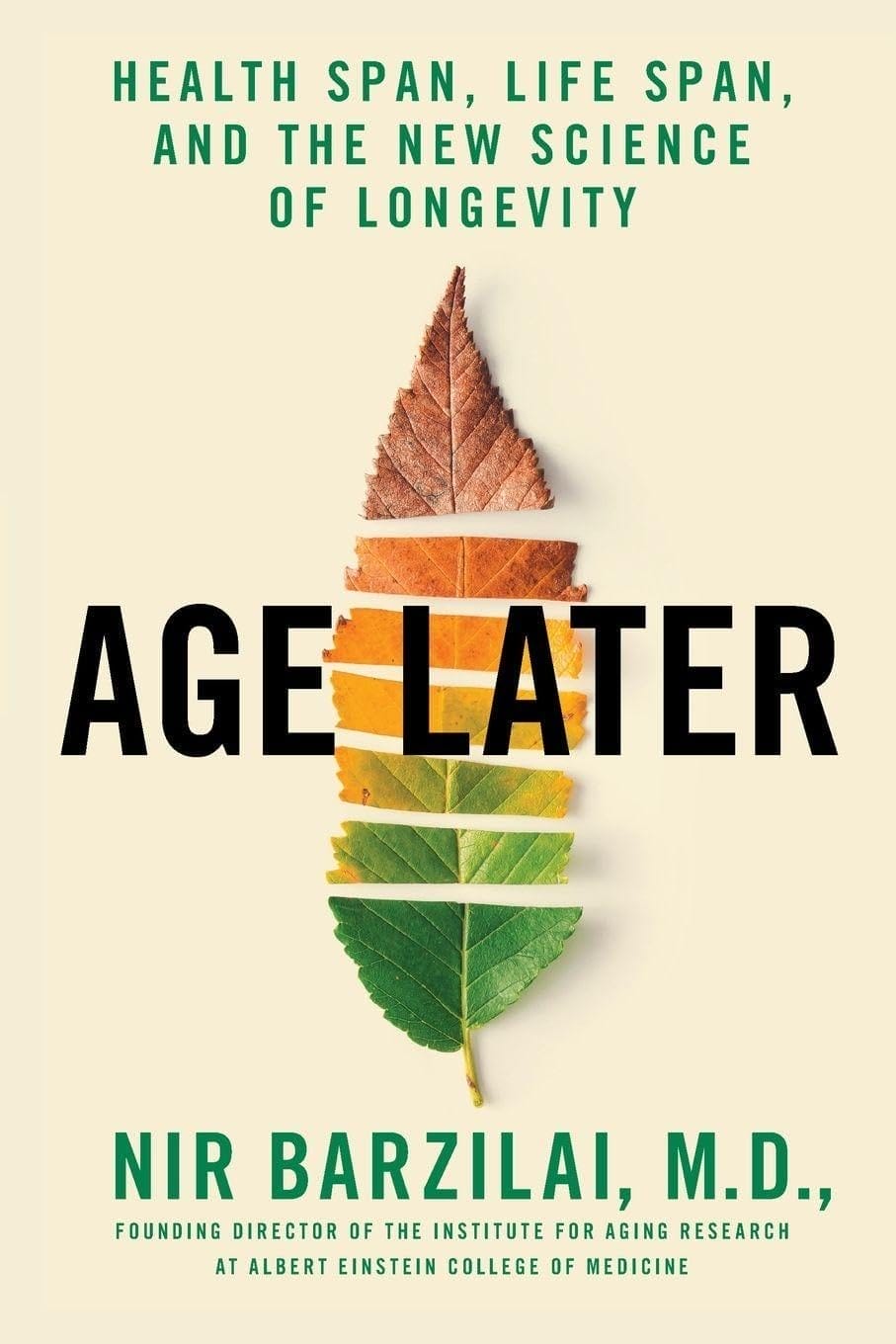
Age Later: Health Span, Life Span, and the New Science of Longevity
(MacMillan Publishers, June 2020)

Compression of Morbidity Is Observed Across Cohorts with Exceptional Longevity
(Journal of the American Geriatrics Society, July 2016)





Lipoprotein Genotype and Conserved Pathway for Exceptional Longevity in Humans
(PLoS Biology, April 2006)
