Videos
-
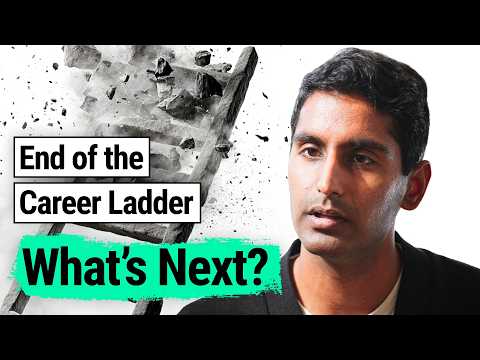
 AI Is Killing the Career Ladder. A Stanford Economist Explains What Comes Next | Bharat Chandar
 -
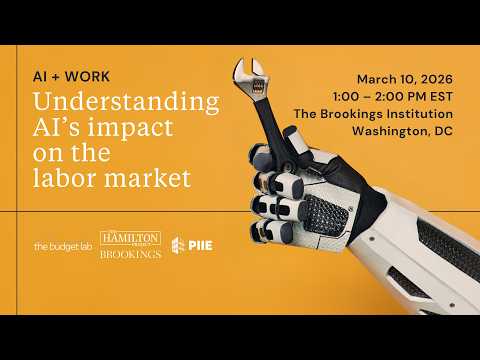
AI + work: Understanding AI’s impact on the labor market
-
Canaries in the Coal Mine? Six Facts about the Recent Employment Effects of Artificial Intelligence
-
Why AI is making it harder for young people to to land their first job


Learn More About Bharat Chandar
Every organization is asking the same question: what will AI actually do to our workforce? The debate has been dominated by speculation, fear, and competing predictions. What has been missing is rigorous, large-scale empirical evidence. Bharat Chandar is one of the economists filling that gap, and the findings from his research at the Stanford Digital Economy Lab are reshaping how business leaders and policymakers think about hiring and the future of work.
Chandar is a labor economist and postdoctoral researcher at Stanford’s Digital Economy Lab and the Stanford Institute for Human-Centered Artificial Intelligence, where he studies the real-world employment effects of artificial intelligence using hard data rather than projection. His work offers something rare in the AI conversation: evidence. And for organizations navigating workforce planning in an era of generative AI, that evidence is exactly what senior leaders need.
What the Data Actually Shows: Early Warnings Worth Heeding
In 2025, Chandar co-authored what quickly became one of the most-cited working papers on AI and employment: “Canaries in the Coal Mine? Six Facts about the Recent Employment Effects of Artificial Intelligence”, with Stanford Digital Economy Lab Director Erik Brynjolfsson and research scientist Ruyu Chen. The paper drew on high-frequency payroll data from ADP, the largest payroll processor in the United States, covering millions of workers across tens of thousands of firms.
The headline finding was striking: early-career workers between the ages of 22 and 25 in occupations highly exposed to AI have experienced a 16 percent relative decline in employment since the widespread adoption of generative AI in late 2022. The declines are concentrated in roles where AI automates tasks rather than augments human capabilities, and they persist even after controlling for firm-level economic conditions. Software development and customer service were among the most affected fields.
The research attracted coverage in TIME, CBS News, and Project Syndicate, and Chandar has since presented the findings at the Hamilton Project at Brookings, the ILO’s Global Dialogue on AI and Labour Markets, the India AI Impact Summit, and the ITU AI for Good Global Summit.
For senior leaders, the practical implication is clear and urgent: AI is not simply a future scenario. It is already reshaping who gets hired, where investment in talent development is most needed, and what the career pipeline will look like for the next generation of workers. Organizations that understand this early are better positioned to invest in the right reskilling strategies, redesign their talent models, and avoid the blind spots that will leave others flat-footed.
Why It Matters Beyond the Headlines: Automation vs. Augmentation
One of Chandar’s most valuable contributions to the conversation is a precise and practical distinction that many organizations conflate: the difference between AI that automates tasks and AI that augments workers. These two dynamics produce entirely different labor market outcomes, and confusing them leads to poor strategy.
In jobs where AI primarily automates routine cognitive work, the research shows that hiring of entry-level workers declines. In jobs where AI amplifies human capability, those effects do not appear. This is not just an academic distinction. It is a strategic lever. Organizations that thoughtfully redesign roles around augmentation rather than defaulting to automation are likely to retain talent pipelines, maintain institutional knowledge, and avoid the productivity cliffs that come when the career ladder disappears.
Chandar brings this insight to life with concrete data drawn from millions of real workers in real firms. He helps audiences understand which parts of their business are most exposed, what the signals look like in practice, and what leaders can do right now to respond constructively.
Building the Career Lattice: Rethinking Workforce Development for the AI Era
The disruption to early-career employment also surfaces a larger challenge: the traditional career ladder, in which workers entered at the bottom, built foundational skills on the job, and progressed upward, may no longer function as it once did in AI-exposed fields. Chandar frames the alternative as a career lattice, a structure in which workers move laterally, build skills across functions, and chart less linear but still meaningful paths.
This reframing has direct implications for how organizations approach onboarding, mentorship, rotational programs, and leadership development. If AI is compressing or eliminating the entry-level roles through which companies have historically identified and developed future leaders, organizations need to think creatively about where that development will come from.
Chandar is actively researching how AI itself can become part of the answer: how can AI tools be deployed not just to automate work, but to accelerate learning and make it easier for workers to build new skills and pursue new forms of contribution? This is one of the most productive and underexplored questions in the future-of-work conversation, and it is one that CLOs and heads of leadership development will find directly actionable.
A Rigorous, Balanced Voice in an Oversaturated Debate
Chandar cuts through the noise and discourse around AI and jobs. His framing is consistently evidence-first, calibrated rather than alarmist, and oriented toward what organizations can actually do rather than what they should fear. At a March 2026 panel at the Hamilton Project at Brookings (co-hosted by the Budget Lab at Yale and the Peterson Institute for International Economics), moderated by The New York Times’ Ben Casselman, Chandar articulated a core point that resonates with business audiences: the aggregate effect of AI on the labor market remains modest for now, but the concentration of impact on specific workers and specific roles demands serious attention. Waiting for aggregate disruption to be obvious before acting will be too late.
He also writes a widely read Substack newsletter, “What’s Next,” and has contributed to Project Syndicate alongside leading economists including Carl Benedikt Frey. His research background spans experimental economics, platform design, and statistical modeling, giving him a breadth that allows him to connect quantitative research to strategic insight in ways that resonate with non-technical executive audiences.
Organizations navigating workforce transformation, talent strategy, and the integration of AI into their operations will find in Bharat Chandar a guide who provides clarity, supported by data, clarity, with a constructive path forward. He is a compelling choice for CLO summits, HR leadership conferences, future-of-work forums, and executive leadership programs where the question is not whether AI will change work, but what organizations should do about it now.
###
Bharat Chandar is a labor economist whose research sits at the forefront of one of the most consequential questions in business today: what is AI actually doing to the workforce, and what should organizations do about it? His work combines rigorous empirical analysis with practical strategic insight, making him a distinctive voice for executive audiences navigating talent, technology, and the future of work.
Chandar is a postdoctoral researcher at the Stanford Digital Economy Lab and the Stanford Institute for Human-Centered Artificial Intelligence, where his research focuses on the real-world employment effects of AI, how workers can adjust to AI-driven labor market shifts, and how AI can be harnessed as a tool for learning and workforce development. His work spans three interconnected questions: which workers are most vulnerable to AI-driven hiring changes and where support should be targeted; how AI can be used to accelerate skill-building and enable new forms of work; and how the impacts of AI will differ across countries and regions.
His flagship contribution is the landmark working paper “Canaries in the Coal Mine? Six Facts about the Recent Employment Effects of Artificial Intelligence”, co-authored with Stanford Digital Economy Lab Director Erik Brynjolfsson and research scientist Ruyu Chen. Drawing on high-frequency payroll data from ADP covering millions of U.S. workers, the paper documents a 16 percent relative decline in employment for early-career workers in AI-exposed occupations since 2022, with the steepest effects in fields such as software development and customer service. The study received wide coverage from TIME, CBS News, and Project Syndicate, and has been presented at the Hamilton Project at the Brookings Institution, the ILO’s Global Dialogue on AI and Labour Markets, the India AI Impact Summit, and the ITU AI for Good Global Summit.
Chandar is also the author of the NBER working paper “The Drivers of Social Preferences: Evidence from a Nationwide Tipping Field Experiment,” a field experiment drawn from more than 40 million Uber rides, co-authored with economists Uri Gneezy, John A. List, and Ian Muir. He writes regularly on AI and economics in his Substack newsletter, “What’s Next,” and has published in Project Syndicate alongside leading global economists.
He earned his PhD in economics from Stanford Graduate School of Business, where he was advised by Rebecca Diamond, Chris Tonetti, and Nick Bloom. He also holds an MS in statistics and a BA in economics from the University of Chicago. Prior to his doctoral studies, he worked as an economist at Uber and at Oracle.
Bharat Chandar is available to advise your organization via virtual and in-person consulting meetings, interactive workshops and customized keynotes through the exclusive representation of Stern Speakers & Advisors, a division of Stern Strategy Group®.
The Workforce Signals Leaders Can't Afford to Miss
The debate over AI and employment has been filled with speculation, competing predictions, and noise—but what has been missing is hard evidence. Bharat Chandar, labor economist and postdoctoral researcher at Stanford’s Digital Economy Lab and Stanford Institute for Human-Centered Artificial Intelligence, is one of the economists filling that gap. Drawing on high-frequency payroll data from ADP covering millions of U.S. workers, his landmark research reveals a 13 percent relative decline in employment for early-career workers in AI-exposed occupations since 2022, with the steepest effects in software development and customer service. This is evidence that AI is already reshaping hiring, not just threatening to. In this data-driven presentation, Chandar helps senior leaders distinguish between AI that automates tasks and AI that augments workers, identify which parts of their organizations are most exposed, and design the reskilling programs, redesigned career pathways, and talent strategies needed to stay ahead of a labor market that is already shifting beneath them.
Reimagining Workforce Development for the AI Era
For decades, organizations built their leadership pipelines the same way: hire entry-level talent, develop them through foundational roles, and watch them grow upward. AI is quietly dismantling that model. According to Bharat Chandar, labor economist and postdoctoral researcher at Stanford’s Digital Economy Lab and Stanford Institute for Human-Centered Artificial Intelligence, the entry-level roles through which companies have historically identified and developed future leaders are already declining, and so is the traditional career ladder. In this forward-looking presentation, Chandar introduces the career lattice, a reimagined structure in which workers move laterally, build skills across functions, and chart meaningful paths that no longer depend on a linear climb. He shows organizations how to redesign onboarding, mentorship, and rotational programs to sustain talent development in an AI-exposed world. CLOs and heads of leadership development will leave with a concrete framework for finding, growing, and retaining the next generation of leaders.





Canaries in the Coal Mine? Six Facts about the Recent Employment Effects of Artificial Intelligence
(Stanford Digital Economy Lab, November 2025)