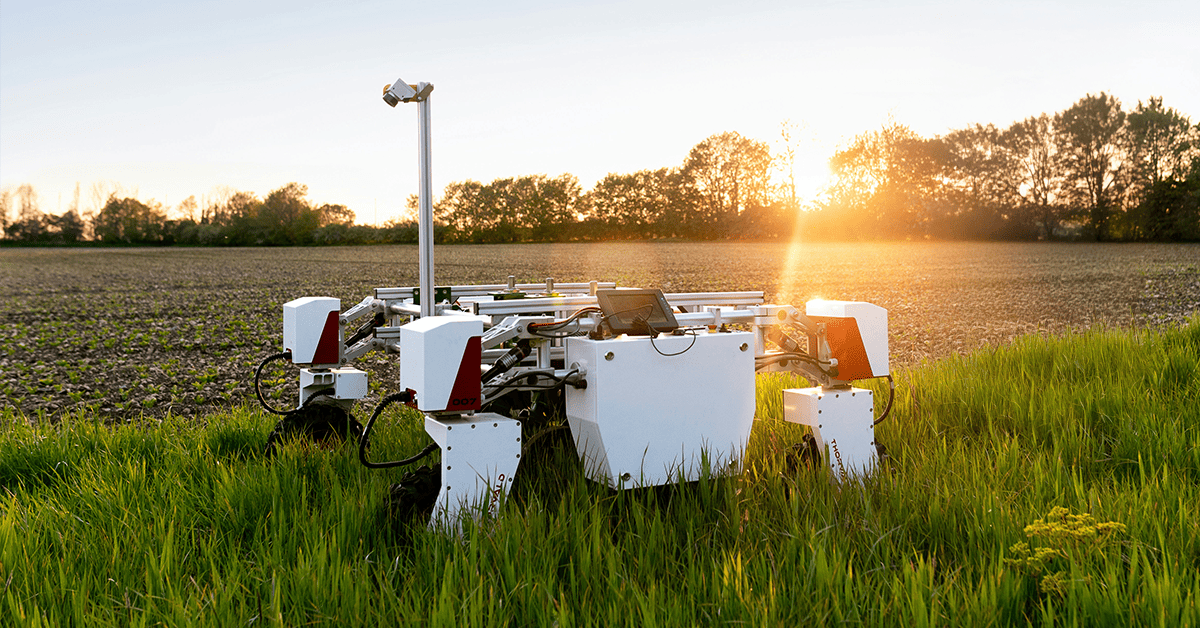
According to The Wall Street Journal, 2026 is shaping up to be the year robots move from interesting to indispensable – not just on factory floors, but in offices, hospitals, classrooms and homes.
As intelligent machines rapidly integrate into everyday workflows, leaders are being forced to rethink talent, productivity, ethics and innovation at the same time. Below are the experts who can help you future-proof your organization before the robotics curve becomes a cliff.
Evaluating AI Investments for Maximum Return
Daniela Rus cuts through the AI noise by zeroing in on what actually delivers financial return – and what quietly drains budgets. Drawing on her leadership MIT CSAIL, the world’s top robotics lab, and her experience launching multiple AI startups, she gives executives a clear framework for evaluating true economic viability. Rus helps organizations avoid costly missteps, prioritize high-value AI applications, and invest in solutions that strengthen both competitiveness and the bottom line.
How Machines Will Impact the Future of Business and Society
Pioneering AI scholar and acclaimed futurist Iyad Rahwan of the Max Planck Institute for Human Development, dubbed “the anthropologist of AI,” guides organizations to make smarter investment and workforce decisions by illuminating how humans and machines will co-evolve. With a signature blend of behavioral science, artistic vision and technology insight, he guides leaders through the societal, economic and creative implications of increasingly autonomous AI.
What Will the Next AI Systems Look Like?
Award-winning Columbia University roboticist Hod Lipson pulls back the curtain on the next generation of AI systems – from models that outperform humans in perception and diagnostics to self-driving machines. Named one of the “World’s 7 Most Powerful Data Scientists” by Forbes, his “Six Waves of AI” framework empowers leaders to understand where robotics is headed and which breakthroughs will matter most for business.
How to Make Robots Smarter – and Why We Should
Pioneering roboticist Ayanna Howard, dean of The Ohio State University’s College of Engineering, shows leaders how to harness robotics and AI while creating systems that adapt to and serve a diverse society. With deep experience at NASA and across industry and academia, she addresses concerns about intelligent robots, showing that machines can behave more like trusted partners than unpredictable tools. Her roadmap for building smarter, more human-like machines inspires trust, improves safety and makes robots feel more like everyday allies than threats.
How K-Pop Can Help Us Build Better Robots
Cornell University’s Malte Jung overturns the assumption that good robots are those with the best hardware and algorithms. Drawing on a multi-year study of companion robots, he shows leaders how companies can build “enculturated machines” – products supported by narratives, rituals, community and care infrastructures – much like the successful playbook of the K-pop phenomenon. The result is a new blueprint for creating technology people want to live with: AI-enabled products customers don’t just use, but embrace.
How to Adopt AI While Protecting Human Capital
UC Santa Barbara researcher Matt Beane draws on over a decade of research, his acclaimed book, “The Skill Code,” and current startup experience to reveal the hidden cost of automation – shrinking opportunities for employees to learn, grow and build mastery. He shows leaders how to redesign workflows and skill-development pathways so robots boost performance while preserving critical learning opportunities.
The Future Will Be Shaped by Optimists
Renowned futurist Kevin Kelly is a leading voice on emerging technologies who equips leaders with practical tools for building the futures they envision. Offering scenario-based foresight, he helps leaders prepare for multiple AI-driven futures – from decentralized networks and agentic AI to hyper-intelligent robotic ecosystems. Kelly’s big-picture thinking gives organizations the tools to stay agile and build toward a future in which technology expands human capability.
The World’s First Near-Telepathic Wearable
Pioneering inventor, researcher and entrepreneur Arnav Kapur introduces leaders to groundbreaking interfaces – like his “silent-speech” AI headset AlterEgo, which was named one of TIME’s 100 best inventions of 2020 – that redefine how humans collaborate with machines. He shows companies how to adopt an AI co-pilot mindset and apply design-thinking principles to solve complex problems faster and more creatively.
Powerful New Tools for Designing an Improved Customer Experience
Dartmouth’s Beth Altringer Eagle helps organizations design products, services and experiences that delight customers – including the next wave of robotics-powered offerings. Drawing on her work at the Desirability Lab and her co-invention of Piaggio’s award-winning Gita robot, she shows teams how to use data and AI to elevate brand desirability and differentiate in crowded markets.
The Future of Work With Humans and Machines Together
Pioneering Carnegie Mellon robotics researcher Henny Admoni is a leading authority on human-aware robots and the future of human-machine collaboration. She advises leaders on how to pair employees with AI systems to improve safety, efficiency and well-being across sectors such as healthcare and manufacturing.
A Blueprint for Designing Robots With Soul
Cornell researcher Guy Hoffman specializes in giving AI physical form to show why the next generation of robots shouldn’t be perfect, but expressive, improvisational and capable of “thinking with their bodies.” Drawing from jazz, theater and animation, he reveals how loosening robots’ rigid programming makes them more intuitive, relatable partners in offices, hospitals, classrooms and homes. He offers a design blueprint for AI-enabled machines that communicate more naturally, improving both trust and the overall user experience.
As artificial intelligence becomes more powerful and is increasingly applied to physical machines, leaders will require the help of the world’s top roboticists. Stern Strategy Group connects you with renowned thought leaders whose insights, strategies and management frameworks help organizations fuel growth and disruptive innovation to better compete in a constantly changing world. Let us arrange for these esteemed experts to advise your organization via virtual and in-person consulting sessions, workshops and keynotes.